


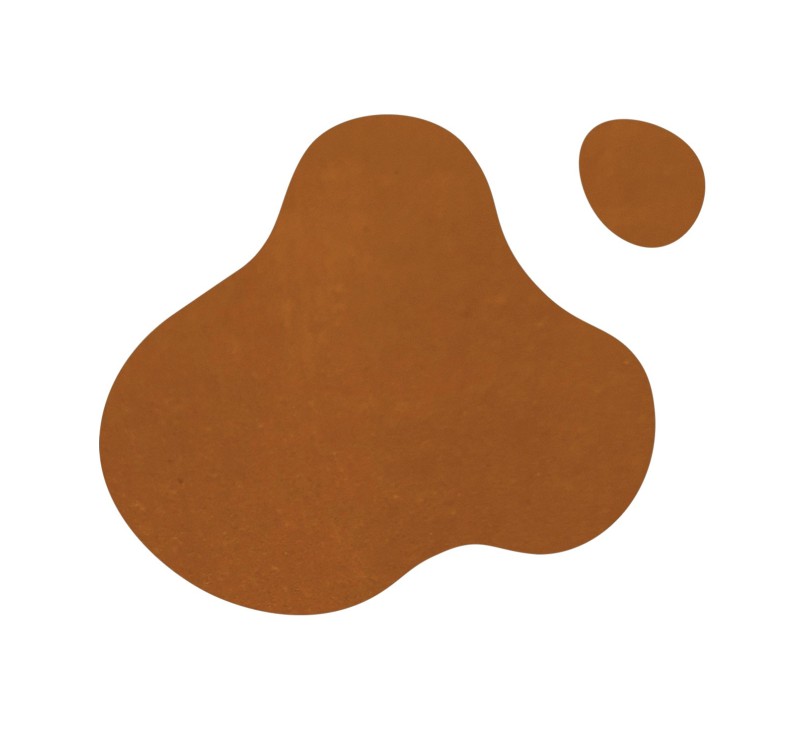

Chestnut Brown is a deep warm brown with a natural earthy tone. Kiwi Underglaze brushes on smoothly and gives a strong, clean, even colour after firing.
Chestnut Brown is a deep warm brown with a natural earthy tone. Kiwi Underglaze brushes on smoothly and gives a strong, clean, even colour after firing.
Chestnut Brown is a deep, warm brown with subtle red and orange undertones. Reminiscent of ripe chestnuts, it is classic and natural, fitting beautifully into earthy, autumnal and botanical palettes.
Kiwi Underglaze was born in a small ceramics studio in New Zealand, out of a passion for ceramics and plenty of testing, with each round helping refine the colour formulas. Its broad range of carefully developed colours gives you the freedom to find just the right shade and plenty of room for creative experimentation. Kiwi delivers reliably vivid colour, and its smooth consistency makes application a real pleasure. Mix, layer and develop your own style – go a little wild, have fun and enjoy the process. That is often where the best work happens – give it a try.
Kiwi Underglaze is a liquid, water-based underglaze made with ceramic pigments and a small amount of flux. It can be applied to leather-hard clay, bone-dry clay and bisque. Thin coats are recommended: one gives a translucent effect, two give semi-opaque coverage, and three build strong, saturated colour. Shake the bottle well before use and let each coat dry before applying the next.
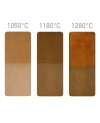
The firing range for Kiwi Underglaze is approximately 1050–1260°C, so the colours work across both low and high firing ranges. The most intense colours are usually achieved in the mid range, around 1180–1225°C, under a thin coat of clear glaze. Without glaze, the surface remains velvety matte when fired from around 1000°C.
When decorating leather-hard or bone-dry clay, the underglaze can be fired together with the piece during a bisque firing at around 1000°C, then covered with clear glaze and fired again.
Kiwi Underglaze brushes on beautifully smoothly and can be used for sgraffito, stamping, stencils, wax resist, gradients and diluted watercolour effects. Add a little water if the underglaze becomes too thick. It is always worth making a test tile with your own clay body and glaze, as temperature, coat thickness and firing conditions can affect the final colour.
The underglazes are lead-free. Some reds, oranges and yellows may contain encapsulated cadmium pigments. For functional surfaces that come into contact with food, the manufacturer recommends a durable clear glaze and correct firing. Matte, unglazed surfaces are not recommended for food contact. Because the formula contains a small amount of flux, take care if a painted surface will sit directly on the kiln shelf.

Data sheet
You might also like


