• Out of stock
Liquid Quartz ceramic sealer - 1240.design

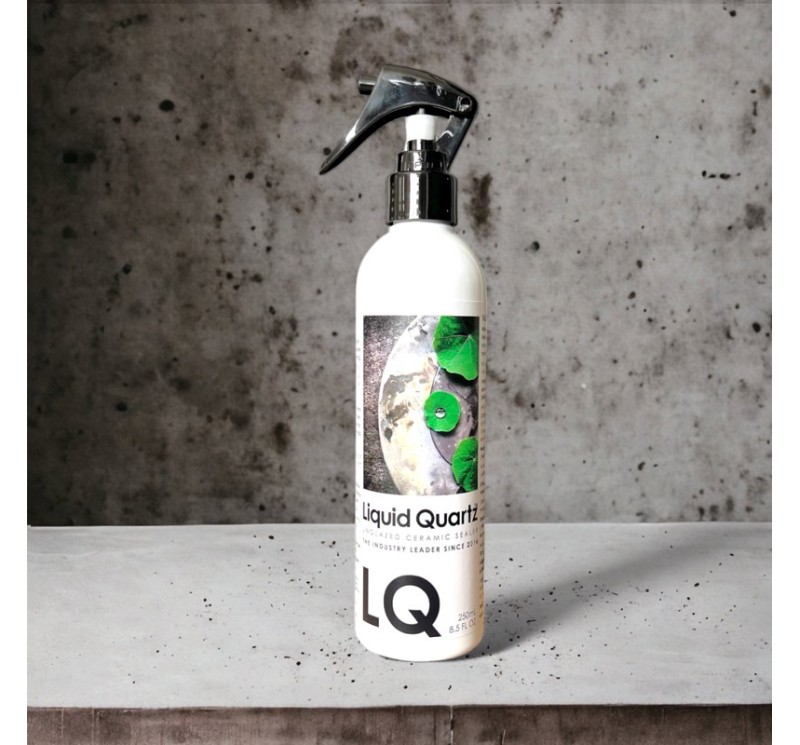
Liquid Quartz ceramic sealer

Price brutto: Including
162.59 zł
Price netto: Excluding
162.59 zł

Liquid Quartz is a non-toxic, water-based ceramic sealer that transforms unglazed decorative ware into food-safe, waterproof, and highly stain-resistant functional ware—without changing its appearance.

Out of stock

Size
WH-LQ-250

Liquid Quartz is a non-toxic, water-based sealer that transforms unglazed decorative ware into food-safe, waterproof, and highly stain-resistant functional ware—without changing its appearance. It can be applied to all unglazed bisque ware, vitrified ceramic ware (which remains porous), and alternatively fired clay bodies (e.g., pit, smoke, saggar, barrel, or naked raku) to create an invisible, breathable yet impermeable barrier against moisture, food juices, and other contaminants.

Made from SiO₂ (Silicon Dioxide or Silica), a naturally occurring oxide and one of the most abundant minerals in the Earth's crust—most commonly found in the form of quartz. Silica is widely used in the production of glass, glazes, underglazes, clay body stains, as well as terracotta, earthenware, stoneware, and porcelain clays. Liquid Quartz is highly abrasion-resistant and excellent at absorbing thermal shock. It is essentially self-cleaning due to its hydrophobic and oleophobic nature, resisting stains from oil, grease, acids, alkalis, and alcohol as effectively as any matte glaze—minimizing the need for chemical cleaners and harsh detergents. Water simply beads and rolls off the surface, carrying contaminants away.

Key Usage Notes:


While Liquid Quartz is not for use over glazed surfaces, it is widely used by artists to seal unglazed areas—especially to prevent staining from contact with lips, fingers, and dishwashers, and to stop water seepage beneath glazed sections.

It can also be used to seal properly cured underglazes (fired according to the manufacturer’s instructions). It will not affect glazed areas—it simply beads and runs off non-porous surfaces—and it does not alter the appearance of your clay body or underglazes.

Some users have reported excellent results sealing:

  • leaky glazed ware from wood firings,
  • crazed or crawled glazes from electric or gas firings,
  • and unglazed areas of raku-fired work.


Note: prolonged contact with certain foods may still cause staining. As with all ceramic ware, rinse dishes promptly after use to maintain the finish. The sealer cures fully within 24 hours without requiring firing or further treatment and becomes completely invisible once dry. It is dishwasher- and microwave-safe up to 450°C, and remains stable at temperatures as low as -70°C, making it ideal for outdoor sculptural work exposed to extreme conditions.

Coverage:


Average coverage: 50–75 ml/m² on highly porous surfaces.

  • A typical low- to mid-fired dinner plate requires 10–15 ml, even with dipping.
  • A 250 ml bottle seals ~16 pieces, while a 1 L bottle seals ~66 pieces (based on 15 ml per piece -  which reflects findings for the most porous surfaces tested).
  • High-fired ware will require significantly less product.

What Liquid Quartz Can’t Do:


  • It cannot seal unstable surfaces (powdery or crumbling after firing) or water-sensitive surfaces (e.g., air-dried clay or ink/paint that has not been fired). It works by soaking into the surface, creating a root-like structure that bonds with the clay body. It does not form a separate layer like epoxy or varnish, and is not suitable for air-dry clay.
  • It cannot make underfired or toxic glazes food-safe, as it does not bond with non-porous surfaces like glazes.
  • It cannot stop chipping or cutlery marks on underfired clay. While it will make the surface waterproof, it does not improve the structural integrity of the clay body.
  • It cannot seal contaminated surfaces. The effectiveness of the product depends entirely on proper preparation and application. Make sure surfaces are clean, dry, and untreated.

Safety & Best Practices:


  • If using post-firing chemicals (e.g., ferric chloride) or any potentially toxic ingredient that may remain in the final work (especially nano-sized particles), test for leaching to ensure food safety.
  • Liquid Quartz works because its particle size is nanoscale—small enough to block water and other liquids. Always apply to completely dry ware, as trapped water cannot escape once sealed and may damage the piece when heated.
  • It is a post-firing product and requires no firing to cure. Apply by brushing, spraying, or dipping. The sealer penetrates the surface, bonds at a molecular level, and self-levels as the water evaporates—leaving behind a permanent, invisible silicon dioxide layer. It cures fully in 24 hours.

Care Instructions & Durability:


  • As with any ceramic item—glazed or sealed—the longevity of the surface depends on how it’s treated. Avoid harsh chemicals, abrasives, or aggressive scraping with cutlery. Gentle washing with mild detergent will significantly prolong the life of the finish.
  • On soft bisque or low-fired pieces, Liquid Quartz will provide waterproofing only as long as the surface remains intact. Unglazed earthenware (e.g., terracotta) can be successfully sealed, but remains fragile and prone to chipping compared to high-fired stoneware or porcelain.
  • Over time, the nano surface that causes water beading (the lotus effect) will flatten due to repeated wiping and use. This is normal and does not reduce water resistance or food safety, as the sealant remains embedded within the clay body.

You might also like